Drone Wedding Photography: A Practical Guide to Wedding Aerials
2026/11/01A wedding album deserves more than one point of view. Drone photography adds sweeping views of the venue and landscape, while ground-level shots capture the vows, the laughter, and the little moments in between. This guide covers the aerial shots to plan, the gear to bring, and the checks to make before your drone takes off.
What Drone Wedding Photography Can Add to Your Gallery
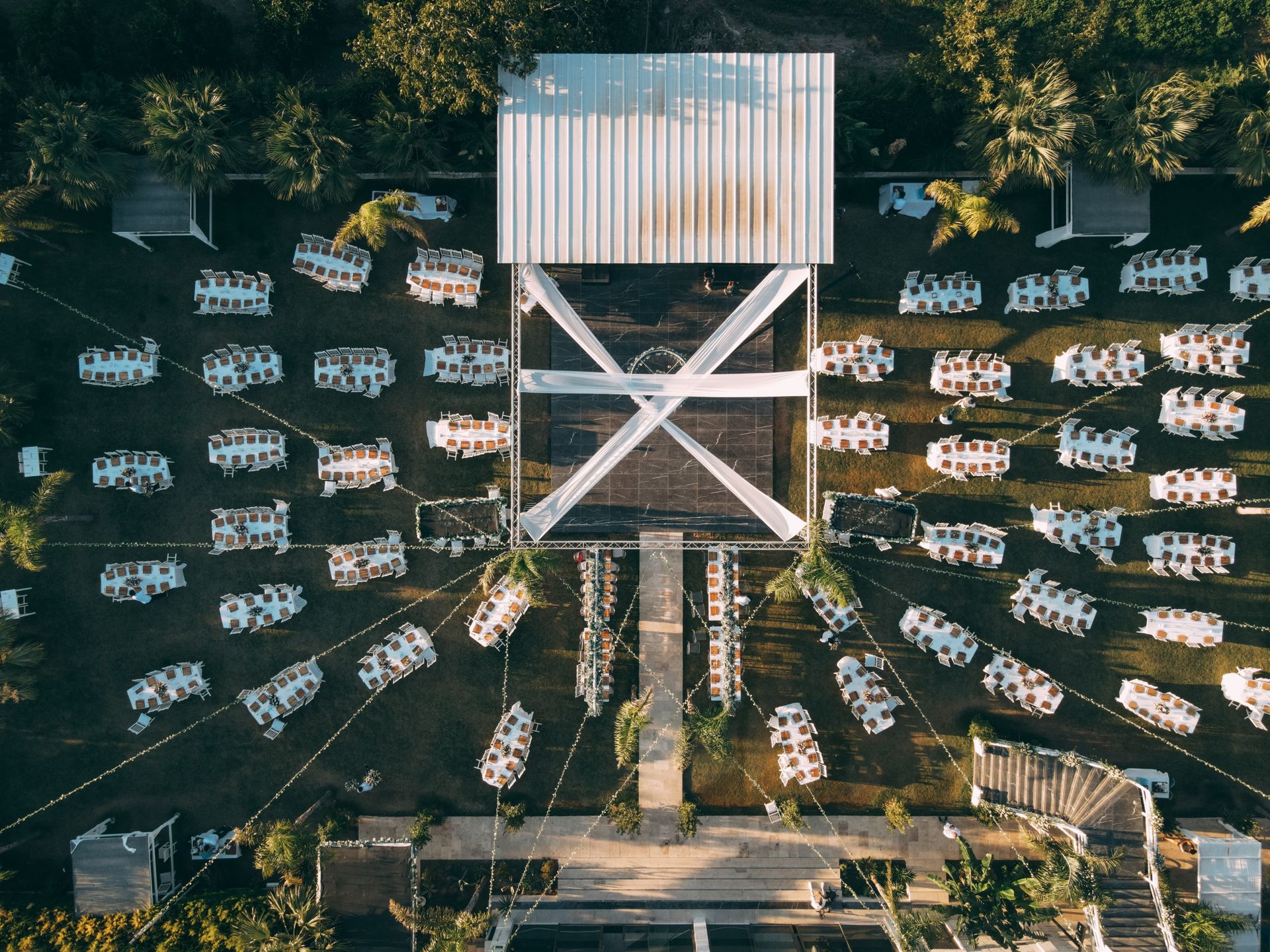
Ground cameras and drones serve different purposes. Your ground team captures expressions and details, while a drone shows how the celebration fits into its surroundings. Start with the couple's priorities and choose a few aerial shots that add something useful to the gallery or film.
Wedding Shots to Plan
Wedding Scene | What to Capture | When to Plan It |
Venue and landscape | A wide view of the venue, gardens, coastline, or countryside. | Before guests arrive, with time to scout the flight route. |
Couple's outdoor portraits | A composition that places the couple within the surrounding landscape. | During a scheduled portrait break, with agreed positions and spacing. |
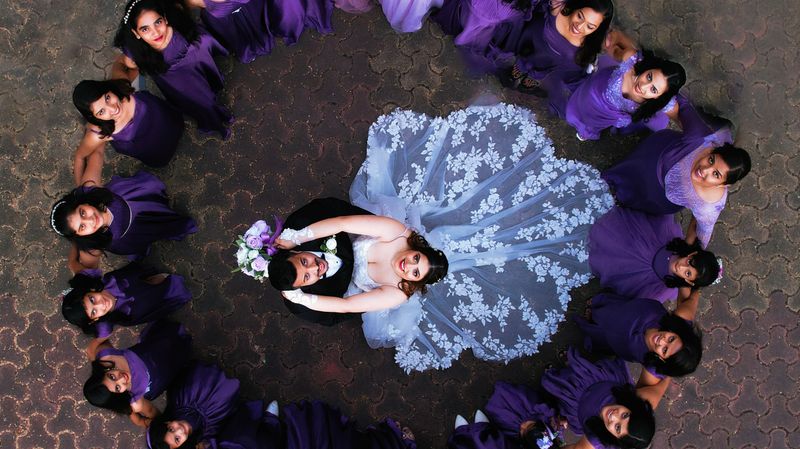
Group composition | An elevated view of a deliberately arranged group, with attention to faces and spacing. | During a coordinated photo window, from a position that avoids flying over guests. |
Ceremony setting | The seating layout, aisle, and outdoor decorations as part of the venue. | Before the ceremony, while the area is clear. |
Opening or closing video shot | A slow reveal or pullback that connects the venue with its surroundings. | During a quiet gap in the schedule, on a clear route away from guests. |
Agree on the framing with the ground photographer before arranging a group. A higher viewpoint can show the overall shape of the gathering, but distance makes individual faces smaller. For portraits, keep the drone far enough away that the couple can follow the photographer's direction comfortably.

What to Look for in a Wedding Drone
Choose a wedding drone camera that fits your delivery format and venue conditions. The best drone camera for a wedding shoot depends on whether you need still photos, a highlight film, or both. Compare each option against your shot list and final deliverables.
What to Prioritize | Why It Matters | Use Cases |
Image quality and delivery | Match resolution, frame rate, still-photo options, and low-light performance to the final output. | Photographers delivering prints, highlight films, or social clips. |
Battery workflow | Plan short aerial windows and spare batteries; maximum flight time is measured under controlled conditions. | Full-day schedules with several planned outdoor moments. |
Noise and timing | Propeller noise may affect quiet moments or on-camera audio; coordinate with the ground team. | Ceremonies where flights can be scheduled away from vows and speeches. |
Obstacle awareness and safe spacing | Sensing can assist, but it may not detect every wire, decoration, or moving person. Scout a clear route and keep a safe distance. | Open venues with room to scout a suitable flight path. |
Portability and editing | Consider transport, battery carriage, destination rules, and time needed to reframe and review footage. | Destination weddings and teams delivering edited aerial clips. |
When comparing the best drones for aerial photography, check the still-photo options as carefully as the video features. If you offer aerial photography for weddings, allow for battery changes and editing in your package and schedule.
How the Antigravity A1 Fits Wedding Photography
With a conventional camera drone, you choose the camera's viewing direction as you record. The Antigravity A1 records a spherical view, allowing you to select different viewing directions from the same footage afterward. For a venue reveal, you could frame the building first, then turn the view toward the surrounding landscape during editing.
The A1 records 8K 360° video at up to 30 fps (7680 × 3840). That resolution covers the full spherical image; a reframed view uses only part of it and doesn't retain the full 8K detail. Reframe and export footage in the Antigravity app or Antigravity Studio before bringing compatible exports into your drone editing software.
A1 Feature | Specifications | Value for Wedding Coverage |
360° capture | 8K spherical video at up to 30 fps; 1/1.28-inch image sensor. Still-photo options: 55 MP and 14 MP. | Choose viewing directions from recorded footage when editing venue and landscape shots. |
Obstacle sensing | Forward and downward vision sensors, plus bottom infrared sensors. | Assists with detecting obstacles along a planned route. Keep scouting and safe spacing part of your flight plan. |
Weight and battery options | Drone with standard battery: 8.8 oz (249 g), up to 24 minutes. With high-capacity battery: 10.3 oz (291 g), up to 39 minutes. | Compact for destination weddings. Both flight times are official maximums from controlled tests; plan shorter shooting windows and battery changes. |
If you're exploring 360 wedding photography, test the framing and export workflow before the event so you know how much detail your intended composition preserves.
Plan your flight position and distance around the shots you want. After landing, allow time to select views, check horizon alignment, and review the exported detail. When you compare the best drones for wedding photography, factor this editing time into your delivery schedule.
Wedding Drone Photography Tips Before Takeoff
For professional wedding coverage in the US, plan to operate under FAA Part 107. The remote pilot in command needs a Remote Pilot Certificate, and the drone must be registered, including models under 8.8 oz (250 g). Check Remote ID compliance for your drone and battery configuration. The flight's purpose determines which rules apply, rather than payment alone.
Confirm Venue Permission
Check the venue's written policy and coordinate with the couple, planner, and ground photographer. Venue permission doesn't replace FAA airspace authorization or other legal requirements. If flights aren't allowed, use ground coverage instead.
Secure Airspace Authorization
Check the venue's airspace and current restrictions using FAA resources before the event. Flights in controlled airspace may require authorization through LAANC or FAA DroneZone; proximity to an airport alone doesn't determine the requirement. Apply early and follow the authorization's limits.
Coordinate the Flight and Ground Team
Agree on the takeoff area, flight route, and shooting window with the planner and ground photographer. Keep guests away from takeoff and landing, and choose routes that avoid flying over them. A certificate, venue permission, or airspace authorization doesn't automatically permit operations over people; those flights must meet separate FAA requirements.
For wedding drone videography, schedule aerials away from vows and speeches so propeller noise doesn't interfere with the recording. Decide who will notify you if the timeline changes. Keep the drone within visual line of sight throughout the flight.
Plan for Weather Contingencies
Check the drone's operating limits alongside wind, gusts, precipitation, and visibility. The A1's published maximum wind resistance is 24 mph (10.7 m/s), which isn't a recommended operating wind speed. A1 isn't waterproof, so avoid rain and heavy moisture. Review the forecast close to the event and again before takeoff, and agree on a ground-photography backup with the couple.
Set Expectations With the Couple
As you work through how to start a drone business, define what your wedding package includes, how you'll handle weather cancellations, and when you'll deliver the edited work. Clear expectations help the couple fit aerial coverage into the rest of their photography plans.

Conclusion
Good drone wedding photography starts with a useful shot list, suitable equipment, and a coordinated flight plan. Choose views that show why the couple picked this setting, whether it's a garden courtyard or a stretch of coastline. Those details give the finished gallery a sense of the place they'll remember.
FAQ
Do I Need a Licensed Drone Pilot for My Wedding?
For professional wedding coverage in the US, hire a pilot qualified to operate under FAA Part 107. Ask who will act as remote pilot in command and confirm their Remote Pilot Certificate. You can also ask how they'll check airspace, arrange venue permission, and coordinate with your photographer. These questions help you understand how aerial coverage will fit into the day.
Can You Fly a Drone Indoors at a Wedding?
Indoor flight may be possible in some settings, but crowded rooms leave little space for safe takeoff, movement, and landing. Guests, decorations, lighting, and venue rules all matter. Ground cameras are usually better for vows and close interactions; drone wedding footage is generally more useful outdoors. Ask the venue about restrictions and identify a clear takeoff and landing area before considering an indoor flight.
What Happens If Weather Prevents Drone Use on the Wedding Day?
If weather rules out a flight, your photographer can follow the ground-photography plan you agreed on beforehand. They can focus on the venue, your portraits, and group photos from ground level. If conditions improve, the pilot can reassess whether a later flight fits safely into the schedule. Confirm with your team how weather-related cancellations affect your booked package.