How Fast Do Drones Fly? Typical Speeds and What Changes Them
2026/11/01Drone speed depends on whether it’s out for a scenic shoot or auditioning for a racing team. Consumer camera drones typically top out around 30–50 mph (48–80 km/h), while high-performance FPV and racing builds can break 100 mph (161 km/h). The real-world number varies with the model, flight mode, and conditions. For filming, it’s smart to leave enough speed (and battery) in reserve to turn, brake, and make it home.
How Fast Do Drones Fly by Type?
Drone speed varies by drone type and purpose. Consumer camera drones prioritize stable filming, FPV racing drones are built for speed and agility, while fixed-wing drones often focus on efficient flight over longer distances. Here’s how their speeds compare based on published specifications and selected examples.
Drone Type | Speed Reference | Key Characteristics |
Consumer camera multirotors | Around 30–50 mph (48–80 km/h) | Maximum speeds in faster flight modes; designed for controlled aerial photography and video |
High-performance FPV and racing drones | Around 60–120 mph (97–193 km/h) | Built for rapid acceleration and agile maneuvering; speeds vary considerably by setup |
Fixed-wing mapping drones | 25–68 mph (40–110 km/h) | Published operating-speed example; designed for efficient forward flight and mapping coverage |
Note: These are illustrative figures, not category-wide averages. The fixed-wing example represents an individual drone's operating-speed range rather than a maximum-speed benchmark. Actual performance depends on the model, flight mode, and conditions.
What Affects Drone Speed in Real Flights?
How fast do drones fly outside ideal testing conditions? A specification describes a tested limit. The pace available on a particular flight also depends on software settings, the drone's power and drag, its battery, and the surrounding air.
Flight Mode and Software Limits
Flight modes affect how quickly a drone can move and respond to pilot inputs. Cinematic or beginner modes typically limit speed for smoother control, while Sport mode allows faster flight on supported models.
Some drones also reduce or disable obstacle sensing in faster modes. Check the manufacturer's instructions before switching modes, especially when flying near obstacles or filming moving subjects.
Motor Power and Aerodynamic Drag
A multirotor tilts to move forward, directing some thrust horizontally while retaining enough lift to stay airborne. Motors, propellers, airframe shape, and control limits determine how much speed it can produce. Greater drag demands more power; stronger motors alone don't guarantee a useful improvement.
Fixed-wing drones generate lift as air flows over their wings, which can make forward flight efficient. That doesn't make every fixed-wing drone faster than every quadcopter. Compare the manufacturer's actual speed figures rather than drawing conclusions from the drone's shape alone.
Battery Condition and Added Weight
How fast can a drone fly with a heavier load or a tired battery? Added accessories can change drag and power demand, while battery condition and temperature can affect available performance. The impact depends on the drone; don't assume one fixed speed penalty applies to every attachment.
Maximum endurance and maximum speed are separate ratings. Manufacturers may measure flight time at a steady, moderate pace with recording disabled. Don't assume the advertised duration applies while accelerating or flying at full speed; use the battery warnings and keep a landing reserve.
Wind Direction and Groundspeed
“How fast does a drone go in wind?” requires a distinction between airspeed, or movement through the air, and groundspeed, or movement across the ground. If a drone maintains 30 mph (48 km/h) airspeed in a straight line, a 10 mph (16 km/h) tailwind produces roughly 40 mph (64 km/h) groundspeed. The same headwind reduces it to about 20 mph (32 km/h).
That arithmetic is an illustration, not a prediction for every drone. GPS-based speed caps and automatic compensation can change the result, while crosswinds require a heading correction. A maximum-speed figure also isn't a wind-resistance rating. Gusts and conditions at altitude may differ from those at takeoff; stay within the manufacturer's operating limits.
How to Choose a Practical Filming Speed
Match the Pace to the Camera Movement
The right filming speed depends on the shot. A wide landscape pass may allow faster movement, while close foreground shots often benefit from slower, steadier control. Fast turns and sudden acceleration can make footage harder to frame.
Test your camera movement before recording the final take. Adjust the speed until the subject stays in frame and the movement feels natural.
Leave Space to React and Brake
At 30 mph (48 km/h), a drone covers about 44 feet (13 m) in one second. That's distance traveled during a one-second reaction delay, not a stopping-distance estimate. The drone still needs room to brake afterward, and wind and flight-controller settings affect that distance.
Practice slowing down in an open area away from people and obstacles. Leave more clearance as speed increases. Obstacle sensing can help within its operating limits, but difficult lighting, thin branches, and restricted sensing modes can affect detection. Keep monitoring the route rather than relying on the drone to catch every hazard.
U.S. flying note: Under FAA Part 107 rules, the standard maximum groundspeed is 100 mph (87 knots), unless an applicable waiver permits otherwise. This limit applies to Part 107 operations, not automatically to all recreational flights. Recreational pilots must follow applicable FAA requirements and recognized community-based safety guidelines. Regardless of the rules, choose a speed that allows safe control and sufficient reaction time.
Plan for the Trip Back
A fast outbound leg can hide a slow return into wind. If you're also asking “how far can a drone fly?”, base the answer on a round trip within visual line of sight, with battery left for landing. An advertised one-way transmission distance isn't a usable round-trip route.
Check your progress early and turn back while you still have options. Return to Home doesn't remove a headwind or add battery capacity. Shorten the route when the drone struggles to make progress, and choose a safe landing option before the battery situation becomes urgent.
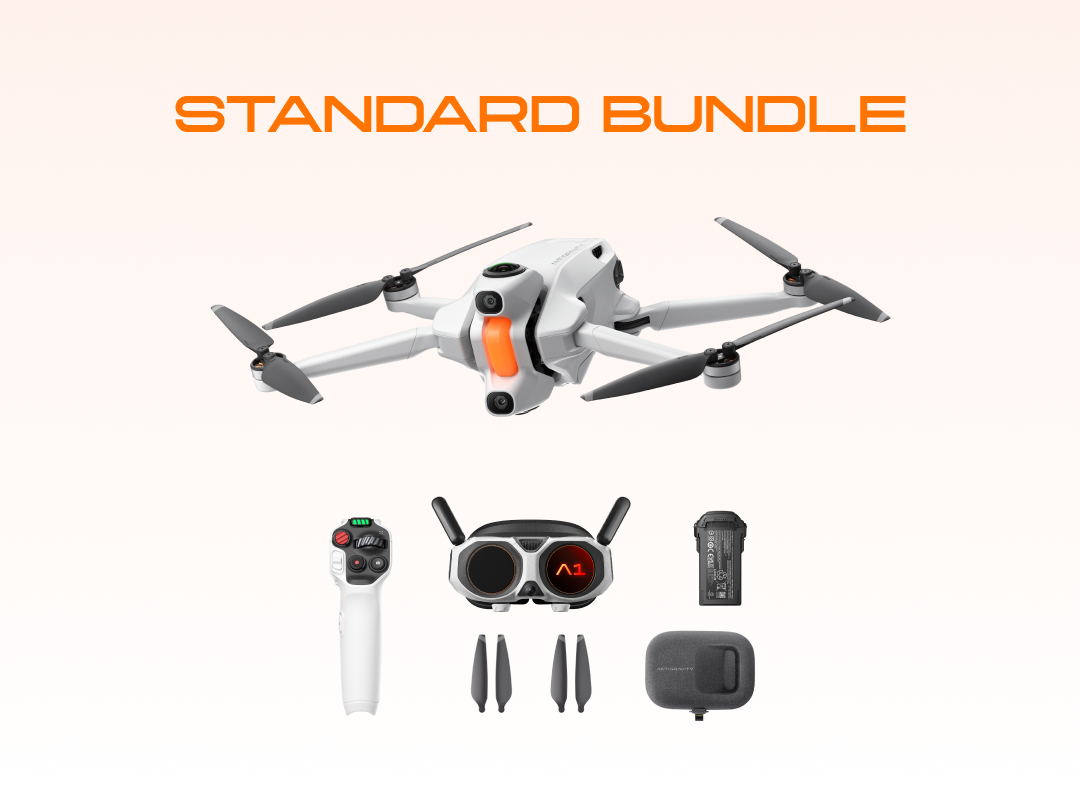
Antigravity A1 Speed and Filming Modes
The Antigravity A1 offers three flight modes with different maximum horizontal speeds, allowing pilots to adjust their pace to the shot and flying conditions.
Flight Mode | Maximum Horizontal Speed | Practical Difference |
Cinematic (C) | 6.7 mph (10.8 km/h) | Reduced speed for deliberate camera moves |
Normal (N) | 26.8 mph (43.2 km/h) | General flying with room to brake |
Sport (S) | 35.8 mph (57.6 km/h) | Highest speed; obstacle avoidance turns off |
These maximum speeds are based on controlled, windless conditions near sea level. Sport mode disables obstacle avoidance, so additional clearance and careful control are essential.
For filming, speed is only part of the picture. The A1 captures 8K 360 video, allowing creators to reframe footage after landing rather than relying entirely on precise camera framing during flight. The final detail depends on the selected crop and export resolution.
Check the Follow Me Configuration Separately
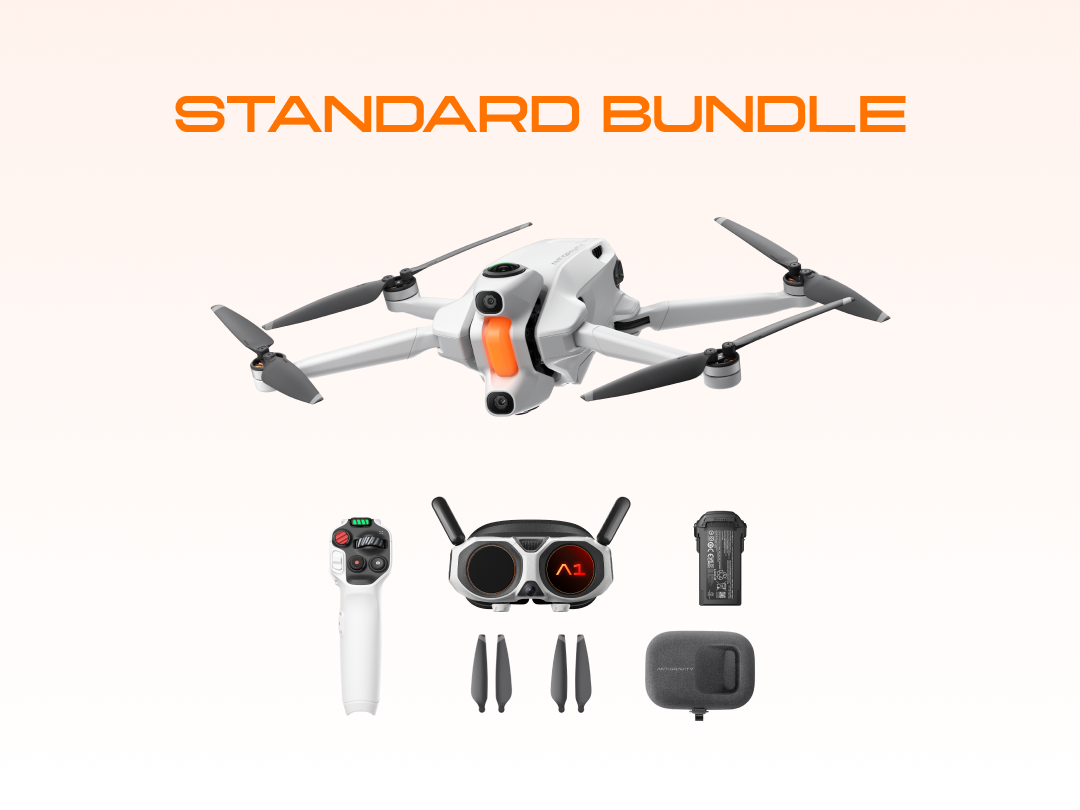
For cycling, hiking, or other moving shots, the Antigravity A1 Follow Me setup combines visual tracking with GPS data from the Watch Remote to help follow a moving subject.
With the High-Capacity Flight Battery and Full-Coverage Propeller Guards installed, the published maximum horizontal speed is 24.6 mph (39.6 km/h) under controlled, windless conditions. This is lower than the standard A1's Sport-mode maximum and should not be treated as a guaranteed subject-tracking speed.
Tracking performance depends on the selected mode, flight conditions, and available clearance. Follow the manufacturer's instructions and applicable flight rules.
Conclusion
How fast do drones fly? Compare the drone type and flight mode first, then allow for wind, battery condition, and the room needed to react. For filming, choose a pace that serves the camera movement and leaves a safe return margin. Check the exact setup's limits, especially when accessories or a Follow Me configuration change the operating conditions.
FAQ
How Fast Can the Fastest Drone Fly?
Guinness World Records lists a battery-powered RC quadcopter ground speed of 408.60 mph (657.59 km/h), achieved by Luke and Mike Bell on December 11, 2025. That is a specific record category for a custom drone, not the expected performance of a consumer camera drone. Record claims can change, so compare the category and date as well as the number.
How Do I Convert Drone Speed From Meters per Second to MPH?
Multiply meters per second by 2.237 to get miles per hour, or by 3.6 to get kilometers per hour. For example, 22.4 mph (36 km/h) is approximately 10 m/s. For a fair comparison, check that both specifications describe the same flight direction and distinguish maximum speed from cruising speed.
Does a Smaller Drone Always Fly More Slowly?
No. A compact racing quad can outpace a larger camera drone because the drone serves a different purpose. Size alone isn’t a reliable speed guide. Compare each model’s published horizontal speed and flight mode rather than judging performance by its dimensions.