The Ultimate Guide to FPV Drones
March 19, 2026
Have you ever dreamed of flying? Not just looking at a tiny dot in the sky, but seeing the world from a bird's perspective, feeling a visceral connection to every turn, and diving as if you were in the cockpit yourself. Enter the heart-pounding world of First-Person View (FPV) flight. Far from the automated, hands-off experience of a typical camera drone, this is pure, unfiltered immersion, a skill that rewards practice with breathtaking results.
In this guide, we'll break down exactly how these incredible machines work, what makes them fundamentally different from their GPS-stabilized counterparts, and outline the first essential steps for any aspiring pilot. Your journey to seeing the world from a thrilling new perspective begins right now.
What is an FPV drone?
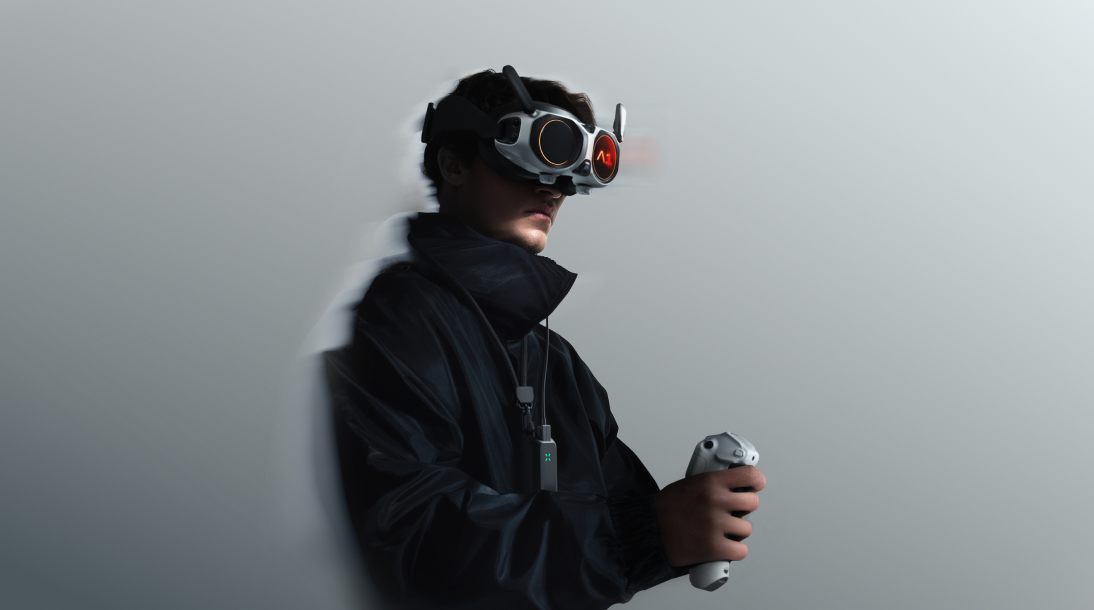
Tired of staring at a phone or tablet on your controller, squinting to try and find your drone through the sun's glare? With FPV drones, a small camera on the drone transmits a live video feed directly to a pair of goggles, completely immersing your senses in the flight experience. The sensation is remarkably close to flying a VR drone, where you're placed right into the aircraft's perspective in real time.
This is the fundamental distinction between standard drones and FPV drones: standard drones make you feel like an operator. FPV drones turn you into a pilot.
This immersive viewpoint is the key to understanding how FPV drones work and why they are so different. The video signal is transmitted over a dedicated radio frequency optimized for incredibly low latency, meaning there's virtually no delay between the drone's camera and your goggles. This shift from a stabilized, automated platform to a responsive, manually controlled aircraft opens up a universe of creative potential. FPV drones are purpose-built for agility, designed to perform rolls, flips, and tight maneuvers that would be unthinkable for a typical drone. This makes them the ultimate tool for drone racing, acrobatic freestyle flying, and capturing dynamic, high-energy cinematic shots.
How the FPV System Works
The magic of FPV flight isn't one single piece of technology, but a team of four core components working together in perfect harmony to deliver that real-time cockpit view.
First, you have the FPV Camera. This isn't necessarily the high-resolution camera that records your cinematic footage; it's a small, lightweight camera optimized for one thing: speed. Its job is to capture the live view from the drone with the lowest possible delay, acting as your eyes in the sky.
Next, that image is sent to the Video Transmitter (VTX). The VTX is a powerful, tiny radio that takes the video feed from the camera and broadcasts it through an antenna. Its sole purpose is to send that visual information out into the airwaves.
Waiting to catch that signal are your FPV Goggles, which contain the Video Receiver (VRX). Modern systems, like Antigravity's Vision Goggles, now focus heavily on immersion and comfort because the flight experience depends entirely on what you see and feel while flying. The goggles take the received signal and display it on two small, high-resolution screens. This is what creates the immersive, three-dimensional perception of flight, placing you squarely in the pilot's seat.
These core FPV drone components — camera, transmitter, receiver, and display — are the building blocks of every thrilling FPV flight you've ever seen. They work together to bridge the distance between you and the drone, making true first-person flight possible.
Standard Camera Drones vs. FPV Drones
Choosing between an FPV drone and a standard drone can feel confusing, but it becomes clear when you think of them as different tools for different creative missions. One is a precision instrument for stable photography, while the other is a dynamic paintbrush for capturing motion.
Standard camera drones are essentially flying tripods. They are designed for ultimate stability and ease of use. Thanks to GPS positioning and automated flight modes, they can hover perfectly in place, fly pre-planned routes, and avoid obstacles on their own. Their primary goal is to make capturing smooth, cinematic video and crisp photos as effortless as possible. When you let go of the controls, the drone simply stops and waits for your next command. This makes them an incredible tool for photography and videography, where calm precision is paramount.
FPV drones, on the other hand, are all about manual control and connection. They are built for agility, speed, and a visceral flying experience. In their main flight mode, known as "Acro", there is no automatic stabilization. Every movement is a direct input from you, the pilot. This raw control is what allows for the incredible dives, rolls, and flowing lines that define FPV footage. It's a skill-based discipline that rewards practice with unparalleled freedom of movement. When you let go of the controls on an FPV drone, it doesn't stop; it continues on its trajectory until you command it otherwise.
A new drone category that lowers the traditional FPV barrier is also emerging. VR drones like the Antigravity A1 combine immersive viewing with intuitive control, allowing beginners to experience FPV-style flight without needing to master full manual acro skills first. Because it captures the full environment in 360°, creators also don't need to perfectly frame shots while flying — they can focus on movement and choose angles afterward. This approach shifts the learning process from "don't crash" to "learn to explore," making early flights far less intimidating.
Building Your Own FPV Drone
A relatively inexpensive, but more technical route to get started in FPV is building your own drone.
When building, the centerpiece is obviously the drone. For beginners, a tiny whoop is the best place to start. These small, lightweight drones use ducted propellers, making them safe for indoor flying and durable enough to handle the inevitable bumps and crashes that come with learning FPV.
Next is the radio transmitter. This controller sends your stick inputs to the drone, and a good one provides the precision needed that makes flying feel natural.
For the full immersive experience, you'll need FPV goggles. These headsets receive a live video feed from the drone, putting you in the pilot's seat. Whether you choose box goggles or slimline goggles, the priority is the same: a clear, low-latency connection that lets you react to obstacles in real time.
Power comes from Lithium Polymer (LiPo) batteries and a proper charger. LiPos deliver the high burst of energy FPV drones need, but they also require careful handling and correct charging practices. Learning basic battery safety is essential for reliable performance and long-term gear health.
Instead of picking out each individual part, new pilots can pick up Ready-to-Fly (RTF) and Bind-and-Fly (BNF) drones. An RTF package includes everything: the drone, controller, and goggles. A BNF drone comes fully assembled but lets you use your own, often higher-quality, radio transmitter. For a simpler option that doesn't require getting your hands dirty, Antigravity A1 gives pilots a full VR view without needing to worry about the complexities of building and piloting a traditional FPV setup.
Beginner's Guide to Flying FPV Drones
The path to becoming a confident FPV pilot might seem daunting, but the journey begins with a single, crucial step — and it isn't buying a drone. If you take one piece of advice for getting started with FPV, let it be this: start with a controller and an FPV drone simulator. This approach is the universally recommended secret to success, allowing you to build foundational skills without the stress and expense of real-world crashes.
Just like learning to drive a car, you wouldn't start on a busy highway; you'd begin in an empty parking lot. We recommend getting a high-quality controller so you can plug it into your computer and immediately start building the muscle memory for controlling pitch, roll, yaw, and throttle, and develop an intuitive feel for how the drone moves in the air.
Dedicating even 15–20 hours in an FPV drone simulator will transform your experience when you fly for real. You'll move past the initial fumbling and be able to control the aircraft with confidence from day one. So, grab a controller, load up a simulator, and start earning your wings in the virtual sky. It's the smartest, safest, and most effective way to begin your FPV adventure.
FAQ
How hard is it to fly an FPV drone?
Flying an FPV drone has a steeper learning curve than a typical drone because of its fully manual nature. However, it's an achievable skill for anyone with dedication. We strongly recommend starting with an FPV drone simulator, which lets you master the physics and controls without risking your gear.
What is the main purpose of an FPV drone?
The primary point of an FPV drone is to capture the world in dynamic motion. It's built for agility, allowing pilots to perform aerobatics, race through courses, or film breathtaking cinematic shots that follow fast-moving subjects with fluid grace. While a standard drone is a flying camera, an FPV drone is an extension of you, used to dart through the skies for immersive experiences that are impossible with a stabilized platform.
Can you use an FPV drone for photography?
While you can capture still photos with FPV drones, it's not their strength. The manual control that makes them brilliant for video also makes them challenging for stable photography. Because the drone requires constant input to stay level, lining up a perfectly composed, crisp photograph is difficult. For high-quality aerial photography, a GPS-stabilized drone is the superior tool.
Conclusion
For many, standard camera drones completely fulfill their needs of aerial exploration and content creation, but if this article has sparked your interest in the high-octane world of FPV drones, then you've already stepped through the cockpit door. FPV drone flight can be tricky to learn, but your time on the sticks and in the simulator is rewarded with exhilarating adventures you can't get anywhere else.
구독하고 계신가요?
구독하면 인기 스토리, 팁, 뉴스를 이메일로 만나볼 수 있습니다.

